The reconstruction of the Španjola Fortress in Herceg Novi has entered the final stage of its first phase, while preparations for the continuation of the works are already underway.
The Španjola Fortress revitalisation project is being implemented through the Interreg IPA – Creativity programme. It is financed by the Ministry of Culture and Media, with the support of the European Union and partners from Albania and Italy.
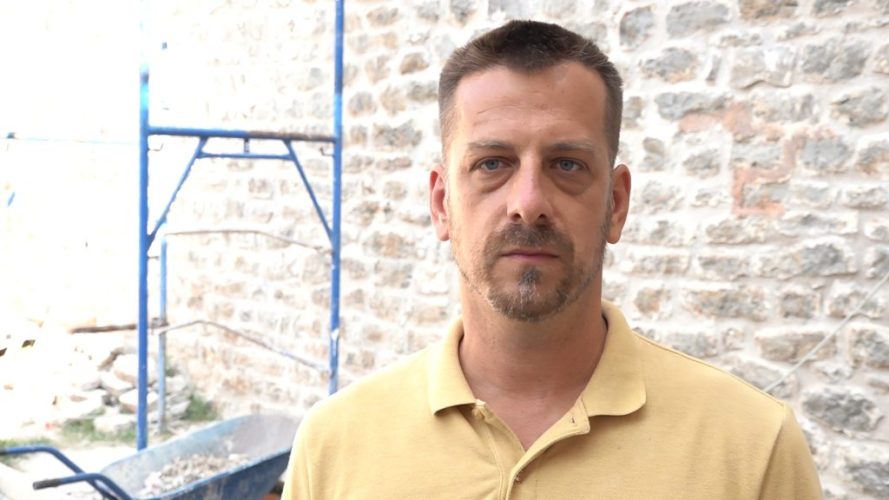
According to architect Vuk Čvoro, the restoration works have uncovered numerous valuable features that were not known when the project documentation was prepared, requiring amendments and further development of the design.
“We are currently in the final stage of the first phase of the fortress reconstruction. In practice, we have already entered the second phase, as several structures have been cleared and prepared for further works. During the restoration, we uncovered paved surfaces and sections of the fortress that had been buried beneath layers of soil, so we are now simultaneously revising and refining the project. This inevitably slows the works to some extent, but it significantly enhances the value of the entire complex,” said Čvoro.

According to him, the reconstruction of the barracks building is expected to be completed by September, marking the completion of the so-called grey, or first, phase of the project. In the meantime, numerous changes have been made to the infrastructure design, including the heating, ventilation and mechanical systems, as well as the layout of equipment, to ensure a higher-quality and more functional final solution.
Čvoro emphasised that the discoveries made on site did not come as a surprise, as he had pointed out from the outset that designing such a complex heritage site without prior detailed investigations would present a significant challenge.
“We uncovered numerous infrastructure elements dating from the Austro-Hungarian period, including drainage channels, water supply and sewerage systems, and even the routes through which electricity was later introduced. All of this has been invaluable in enabling us to adapt the new infrastructure to the existing conditions while preserving the site’s authenticity,” explained Čvoro.
In addition to infrastructure systems, the clearance works revealed the remains of smaller structures, various types of paved surfaces, and new information about how the fortress functioned, including its water collection and distribution system. Although the legend of a tunnel linking Španjola Fortress with the town has not been confirmed, the research has opened up new opportunities for a better understanding of this historic complex.
Čvoro believes that, once the construction works are completed, there will still be scope for further archaeological investigations.

“I am confident that Španjola Fortress will function exceptionally well if it is managed properly, but it is essential to improve its transport links with the town. In addition to upgrading the access infrastructure, one particularly attractive option would be the construction of a cable car, which would further enhance the value of the fortress and enrich Herceg Novi’s tourism offer,” concluded Čvoro.
He also stressed that the completion of the second phase of the restoration will not mark the end of the work at Španjola Fortress. Further improvements will include the development of access roads, parking facilities, lighting and landscaped green areas, as well as the continuation of archaeological research that could provide new insights into the history of one of Herceg Novi’s most significant fortified complexes.
Source: rthn.co.me