


Much has been done in the 35 years since Montenegro declared itself an ecological state, but more could have been achieved, said the Ambassador of the European Union to Montenegro, Johann Sattler, at a conference marking the 35th anniversary of the adoption of the Declaration on the Ecological State of Montenegro.
The Ambassador said that the focus should now be on what still needs to be done, particularly in the context of closing Chapter 27.
“Much has been done, but more could have been done to make Montenegro a truly ecological state. We should have done more, but let us not dwell on what we should have done. Let us see what needs to be done now,” Sattler said.
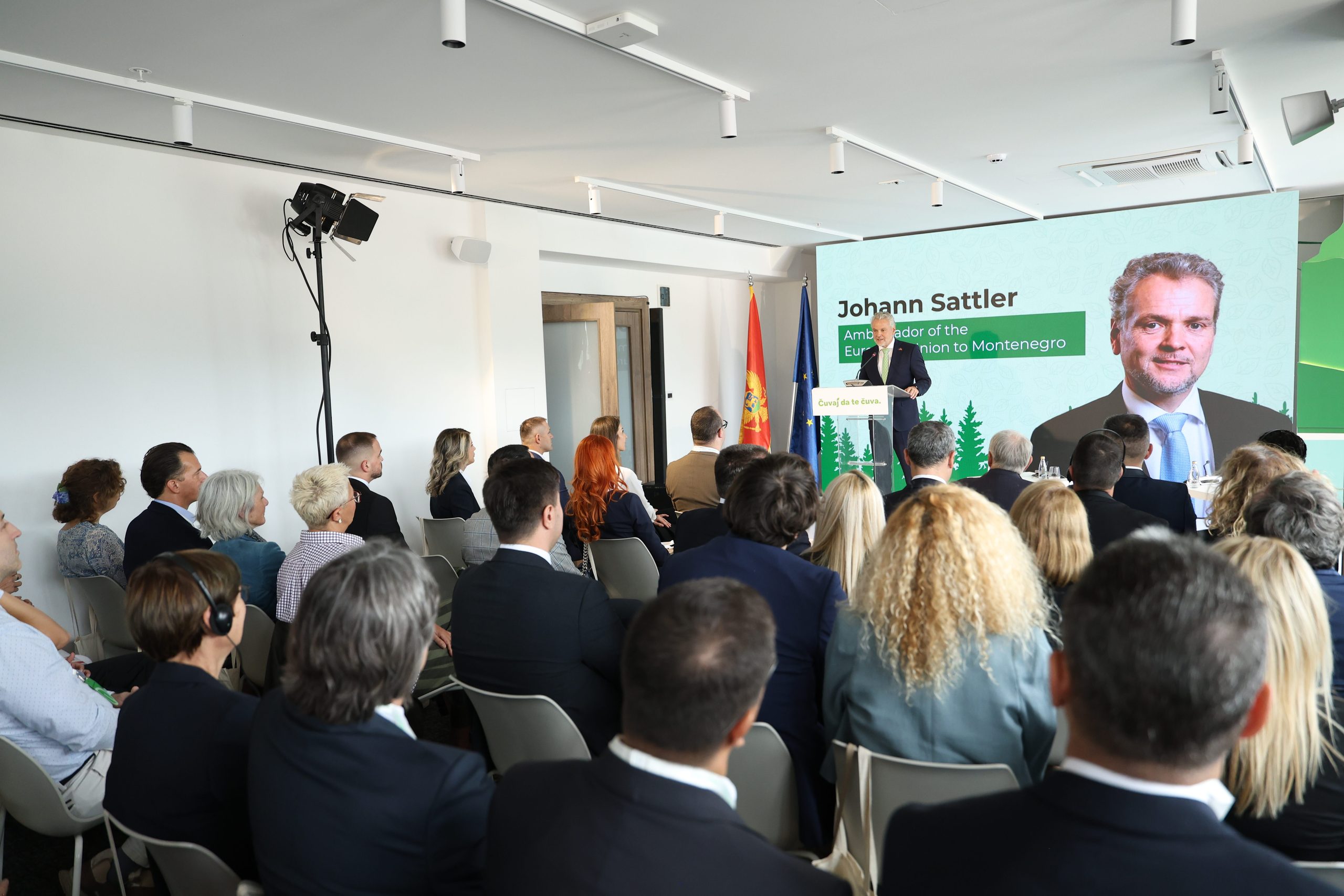
He said that Montenegro had made excellent technical progress, particularly with regard to the proposed Natura 2000 network, which covers more than 44% of the country’s territory.
Sattler said that, under Chapter 27, Montenegro needs to ensure the Natura 2000 network is fully operational, that effective environmental policies and local waste management plans are in place, and that its capacity to implement them is strengthened.
According to him, ideas and words matter, especially when enshrined in founding documents, but words without concrete action do not bring about change.
Sattler also referred to the protest by environmental activists held outside the venue, saying that he welcomed their gathering.
“This is democracy, and this gathering is a clear sign of it,” Sattler said.
He added that he agrees with their criticism and hopes to join the gathering.
He said that change requires all forces in society and everyone who wants to see progress in Montenegro and the region.
Sattler noted that 15 clean-up actions were organised during the first year of the environmental campaign, along with activities related to recycling, improving areas around schools, and workshops held across Montenegro.
“This is only the beginning,” Sattler said.
He said that nature protection could bring together people, institutions and communities and show that individuals have a role to play in bringing about change.
Sattler concluded by stressing the importance of thinking about future generations.
“We should plant trees in whose shade we will never sit, but we should plant them nonetheless.”
Minister of Ecology, Sustainable Development and Northern Region Development Damjan Ćulafić said the campaign aimed to grow into an initiative involving society as a whole, beyond day-to-day politics, united around the common goal of protecting nature.
He said that more than 100 partners are now involved in the campaign, including representatives of the non-governmental sector, the media, education and institutions.
Ćulafić said that numerous clean-up actions targeting illegally dumped waste and car tyres had been organised, along with other activities aimed at protecting the environment.
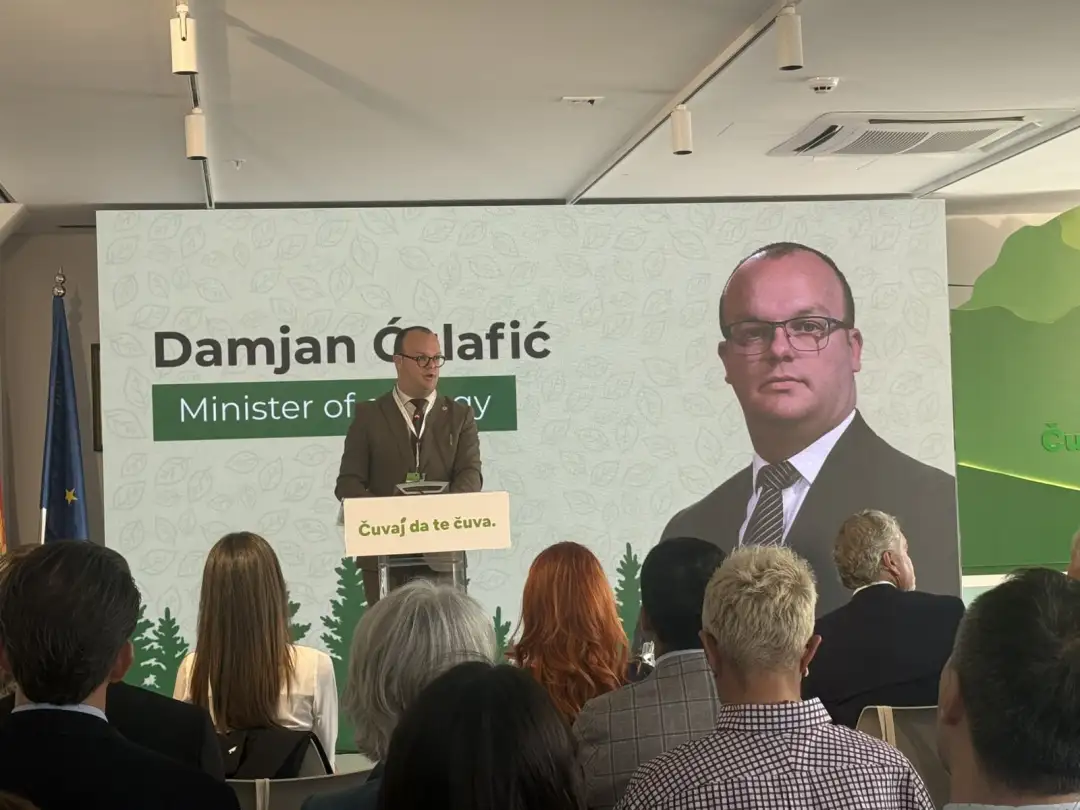
He said that one of the campaign’s greatest achievements was bringing together state institutions and other parts of society.
Ćulafić expressed particular thanks to Sattler for his contribution to the campaign and his personal involvement in environmental protection activities.
He said that Sattler “had no problem picking up every bag he came across in nature”, as well as pointing out problems, intervening and helping wherever he could.
“Not as the Ambassador of the European Union, but as a friend of Montenegro, I would like to thank you,” Ćulafić told Sattler.
Ćulafić said the campaign would continue with even greater momentum and that anyone wishing to help improve Montenegro’s environmental situation was welcome to take part.
President of the Petrović Njegoš Foundation, Prince Nikola Petrović-Njegoš, said that he understood the disappointment and anger of environmental activists, as it appeared that Montenegro had spent several decades forgetting the obligations arising from its commitment to being an ecological state.
“I understand their disappointment and anger, because it seems that Montenegro has forgotten these obligations for several decades, devoting itself to construction and tourism,” Petrović-Njegoš said.

He said that, beyond marking the anniversary, the forum in Žabljak was neither a political rally nor a court, but an opportunity to reactivate the ecological state project enshrined in the Constitution, which brings society together and places obligations upon it.
Petrović-Njegoš recalled that Montenegro was the first country in the world to enshrine its environmental commitment in its Constitution, noting that, when the idea emerged, it took courage and vision to believe in it.
According to him, the challenge of becoming an ecological state that Montenegro set itself 35 years ago is taking on its full significance today because of global warming and climate change.
“However small it may be, Montenegro can tomorrow be at the forefront of this struggle,” Petrović-Njegoš said.
He said that small states such as Montenegro could become laboratories for an ecological and solidarity-based transition and demonstrate that such change was both possible and desirable.
Petrović-Njegoš announced an initiative to organise a forum of small states that have become pioneers in particular areas of the ecological transition in Žabljak next year.
He said that the forum was an opportunity to renew the constitutional and moral obligation towards the concept of the ecological state.
Petrović-Njegoš concluded his speech with a verse by his ancestor, Petar II Petrović Njegoš: “Let what cannot be happen.”
President of the Municipality of Žabljak, Radoš Žugić, said the gathering is particularly significant because it is held in the town where the idea of declaring Montenegro an ecological state was conceived 35 years ago.
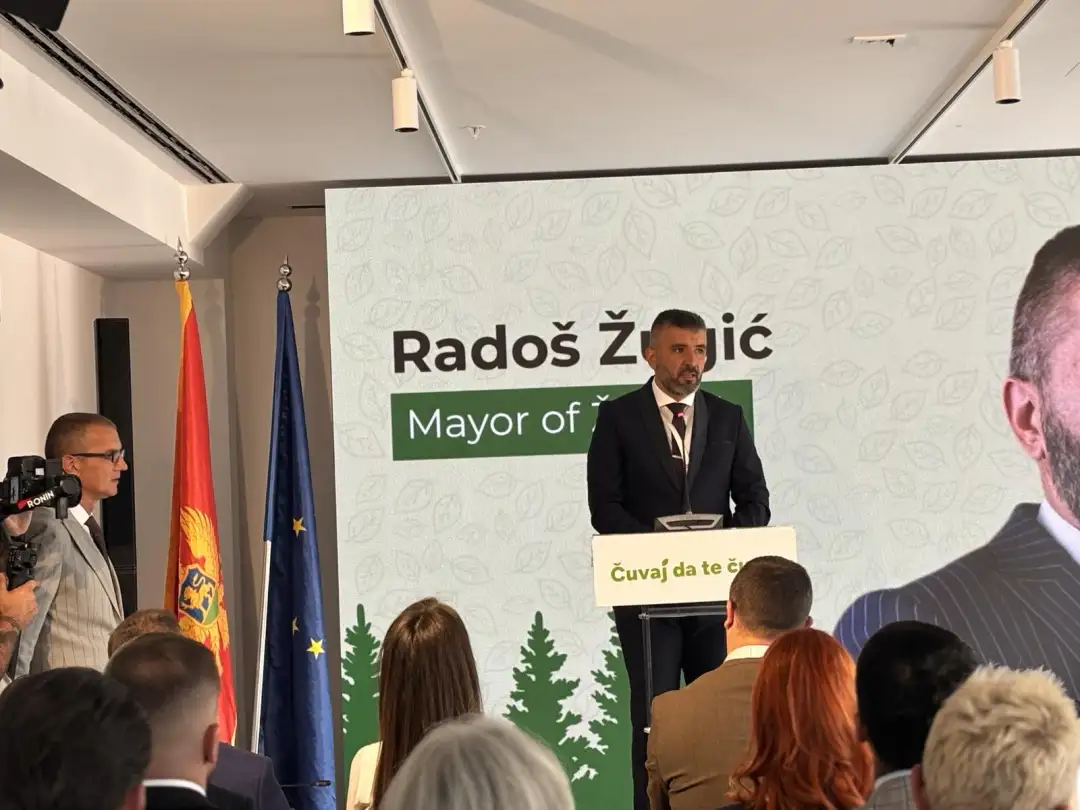
He said the ecological state and the principles behind it should be discussed every day in schools, kindergartens, public discourse, and local politics.
Žugić said that Žabljak is on the verge of becoming the first Montenegrin municipality whose territory doesn’t have a single metre of asbestos-cement water pipeline.
According to him, the state budget provides for projects worth nearly EUR 10 million related to solid municipal waste management in Žabljak.
“We are expecting the construction of a transfer station, a composting facility and a crusher, as well as the implementation of a project to transition to an integrated solid municipal waste management system,” Žugić said.
He said that these were concrete examples through which Žabljak wanted to demonstrate that it could become Montenegro’s ecological capital in the fullest sense, rather than merely formally, as the place where the ecological state was declared.
“Through our example and the policies we pursue at local level, we must constantly and consistently demonstrate that the idea of an ecological Montenegro is alive,” Žugić concluded.
Justine Furtado Fernandes, a representative of the Prince Albert II of Monaco Foundation, said that the lasting significance of the Declaration on the Ecological State lay not only in the vision it established, but also in how to turn environmental ambitions into a lasting culture of action.
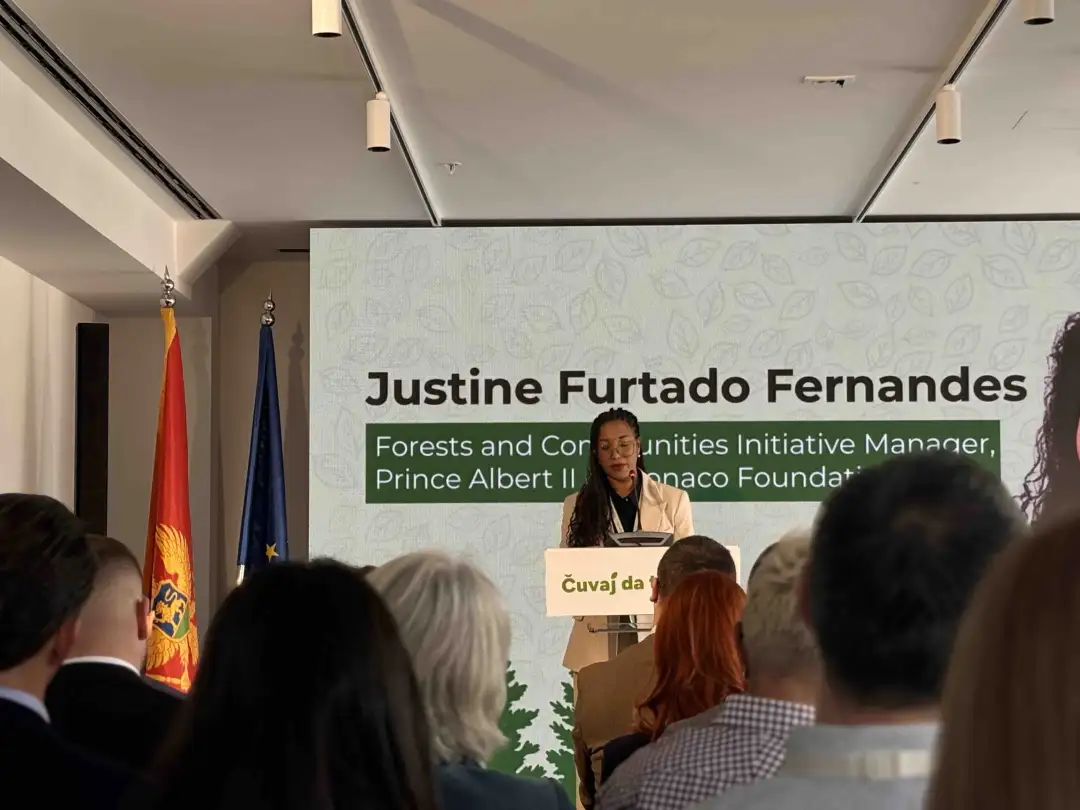
“The Declaration can set the direction, but it becomes transformative when it is implemented through institutions, territories and everyday choices,” Fernandes said.
She said laws alone were not enough to protect habitats and rivers or change practices, but progress began when science guided decisions, authorities ensured continuity, communities helped develop solutions, and economic actors accepted their role in the transition.
Fernandes noted that the Prince Albert II of Monaco Foundation had been cooperating with Montenegro for more than a decade, supporting projects on Lake Skadar and along the Montenegrin coast that combine nature protection, education, scientific monitoring and responsible tourism.
She said that environmental responsibility could only be sustainable if it was shared.
“This is not a task for one generation, one ministry or one person; it must involve society as a whole,” Fernandes said.
According to her, small states can, precisely because of their size, be more agile, experiment with new solutions and, as Prince Nikola said earlier, become a kind of laboratory for the ecological transition.
Article, photo, and video source: Agencija Mina