


International Women’s Day marked by a Panel Discussion “RIGHTS. JUSTICE. ACTION. For All Women and Girls”
Without the equal participation of women, there can be neither full democracy nor sustainable development. This was the message conveyed during the panel discussion held at Europe House to mark International Women’s Day.
The event was organised by the Delegation of the European Union to Montenegro through the Europe House project. It brought together four ambassadors of this year’s campaign “RIGHTS. JUSTICE. ACTION. For All Women and Girls”: the Vice-President of the European Court of Human Rights, Prof. Dr Ivana Jelić; the Minister of Education, Science and Innovation, Prof. Dr Anđela Jakšić Stojanović; the Executive Director of TV Vijesti and Daily Press and the President of the Association of Women Leaders of Montenegro, Marijana Kadić Bojanić; as well as architect and environmental activist Zenepa Lika. The panel was moderated by the Executive Director of the SOS Hotline Podgorica and long-standing gender equality activist Biljana Zeković.
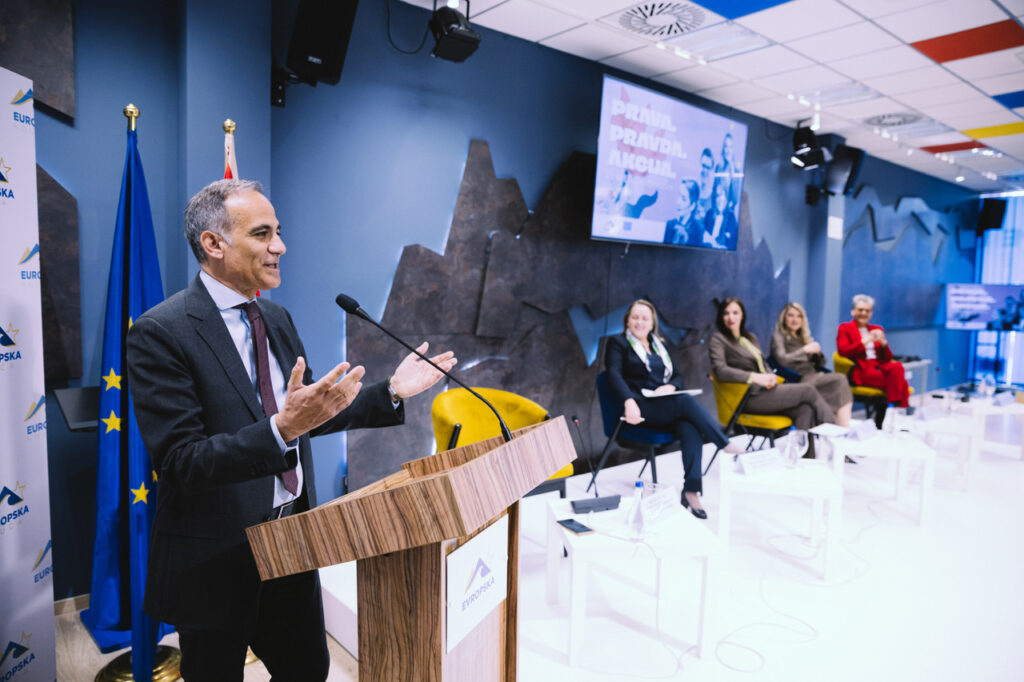
The Deputy Head of the Delegation of the European Union to Montenegro, Riccardo Serri, emphasised that International Women’s Day represents an opportunity to reflect on progress while also reminding us of the challenges that persist worldwide.
“For more than a century, International Women’s Day has been an opportunity to review the progress achieved and renew our commitment to advancing women’s rights. Nevertheless, despite this progress, gender equality remains one of the key challenges of our time,” Serri stated.
He reminded the audience that women still make up less than one-third of members of parliament worldwide and remain under-represented in decision-making processes, including peace negotiations. Serri stressed that the European Union places gender equality at the centre of its policies through the EU Gender Equality Strategy 2026–2030, the Roadmap for Women’s Rights, and the Gender Action Plan III, and through the Women, Peace and Security agenda, which promotes greater participation of women in decision-making and peacebuilding. He also highlighted that fundamental rights, including gender equality and non-discrimination, form an important part of the EU accession process through the principle of “fundamentals first.”
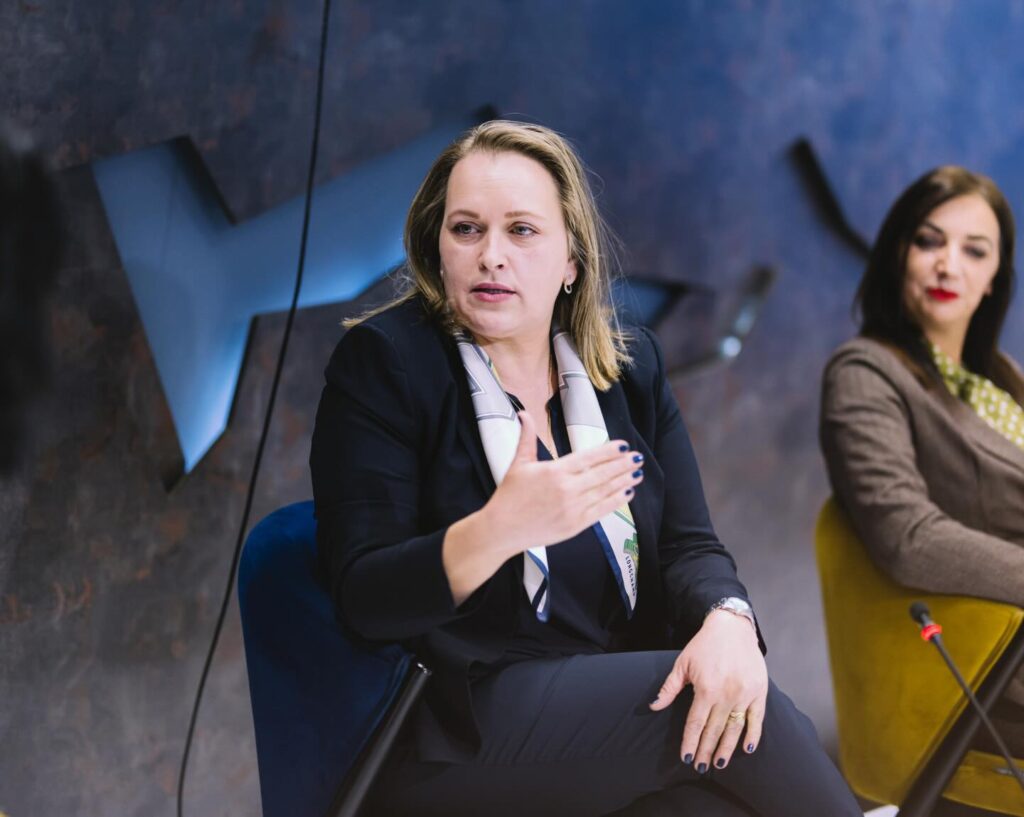
The Vice-President of the European Court of Human Rights, Ivana Jelić, spoke about the importance of the legal system in protecting women’s rights, emphasising that gender equality is inseparably linked to the quality of democracy.
“Half of society are women – if half of society does not have an equal seat at the decision-making table, there can be no full democracy,” Jelić stated.
She also recalled judgments of the European Court of Human Rights that have strengthened standards for the protection of women from violence, stressing that domestic violence is not a private matter but a responsibility of the state.
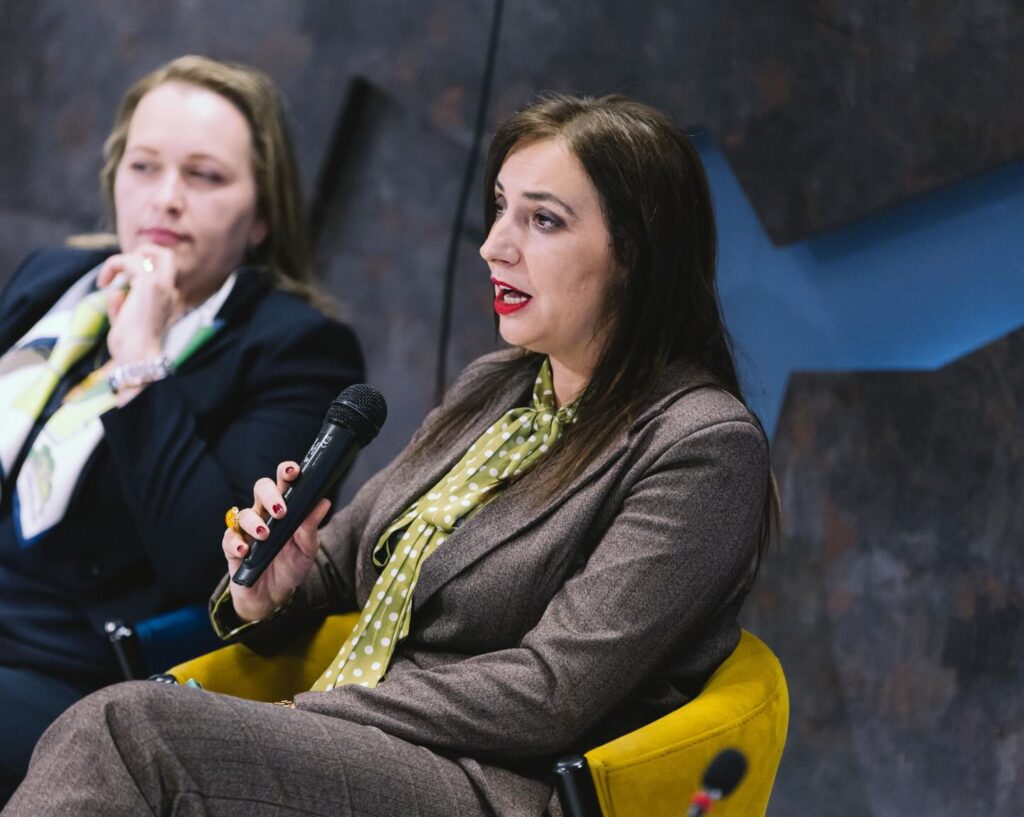
The Minister of Education, Science and Innovation, Anđela Jakšić Stojanović, pointed to the key role of education in building an equal society.
“The issue of gender equality is not only a women’s issue – it is an issue for society as a whole and the values on which we build the future,” the Minister stated.
She noted that analyses have shown insufficient representation of women in textbooks and curricula, and that education reform will devote greater attention to highlighting women’s contributions in history, science and culture.
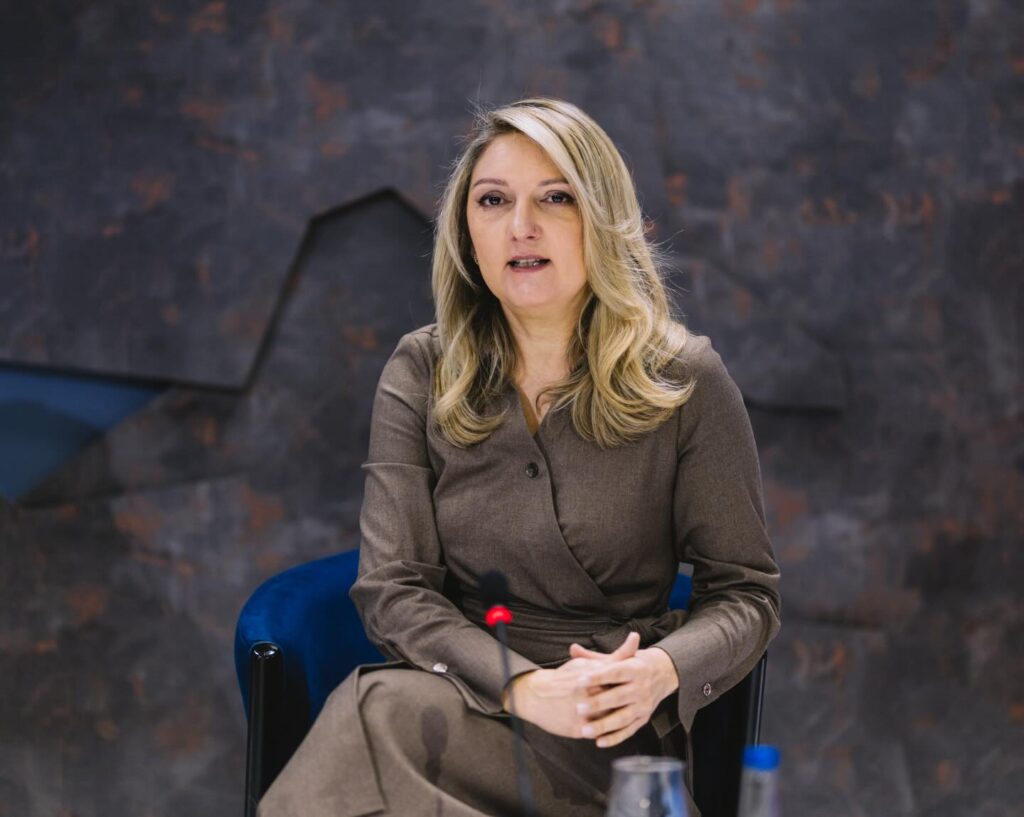
The Executive Director of TV Vijesti and Daily Press, Marijana Kadić Bojanić, spoke about the position of women in the media and the challenges female journalists face in the public sphere.
“Do not allow people to ask you questions about your private life in your professional life – that is completely irrelevant to the job,” she told young people.
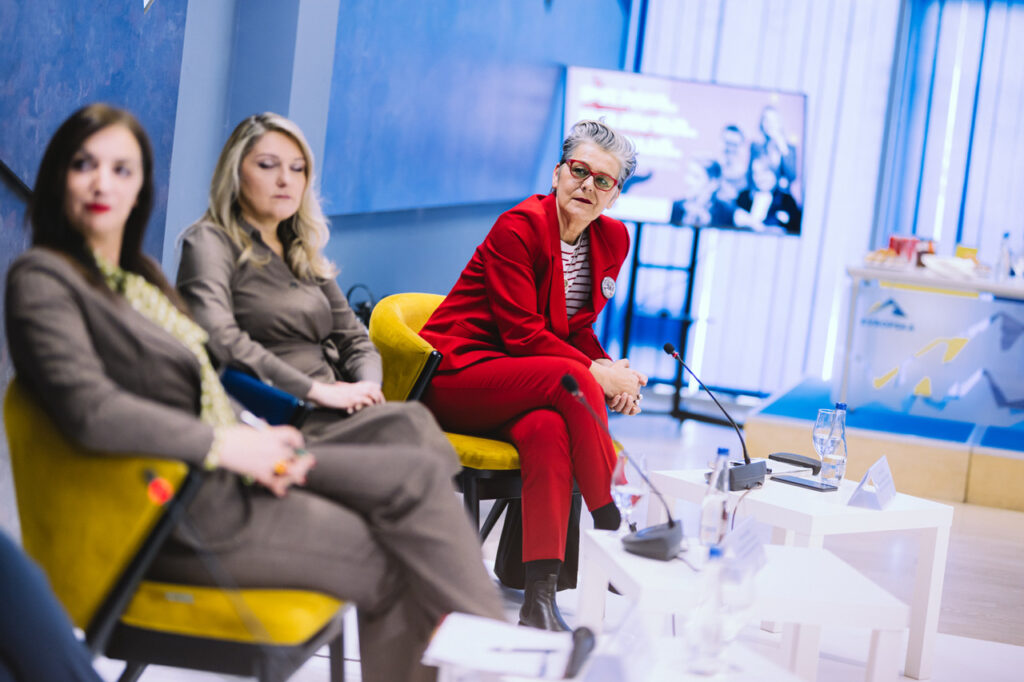
Architect and activist Zenepa Lika spoke about her experience in civic activism and the struggle to protect the public interest, particularly through her efforts to preserve the Ulcinj Saltworks.
“If you know that you are on the right side and fighting for the public interest, it is easier to endure pressure and belittlement,” Lika said.
The panel concluded with a message to young people to be brave, authentic and persistent in the fight for a more just society, emphasising that knowledge, hard work and integrity are the foundations of both personal and professional independence.