


Someone who constantly tries to please others may seem very caring; someone who is always strong may seem very resilient; and someone who works a lot may seem highly dedicated. However, if these behaviours are driven by internal pressure, and a person finds it difficult to say “no”, ask for help, slow down, or accept that something isn’t perfect, what appears to be a virtue on the outside can become a source of considerable strain on the inside.
At the “What Drives Me?” ČEK workshops, we explored what lies behind our everyday reactions, decisions and behaviours with psychologist and psychotherapist Milena Žujović.
“Being responsible, strong, hardworking, quick or considerate of others are qualities that can be very useful. The question is what happens when we no longer have a choice and feel that we must always be this way,” Žujović said.

When “I want it to be good” turns into “Nothing is ever good enough”, perfectionism stops being healthy.
According to Žujović, the line between these two attitudes depends on our ability to assess when something is good enough in the circumstances.
“Wanting to do something well can motivate us and help us stay committed. The problem arises when the standard is no longer flexible and a mistake starts to mean that we are not good enough.”

Žujović emphasised that simply recognising these behavioural patterns is not enough to bring about real change.
“Recognising a pattern is an important first step, but it does not necessarily change the way we function. We may know our own traits very well, recognise that we often try to please others or feel the need to keep everything under control, yet still find ourselves doing the same thing again in a particular situation. That is why it is important to understand how the pattern works for us, when it is triggered, what it gives us, and what we are trying to achieve through it. Only then can we begin to explore different possibilities,” Žujović explained.
She noted that we do not have to abandon our standards, sense of responsibility, ambitions or care for others. However, when we recognise that we are doing something because we feel under internal pressure, we can pause and consider whether another option is available.

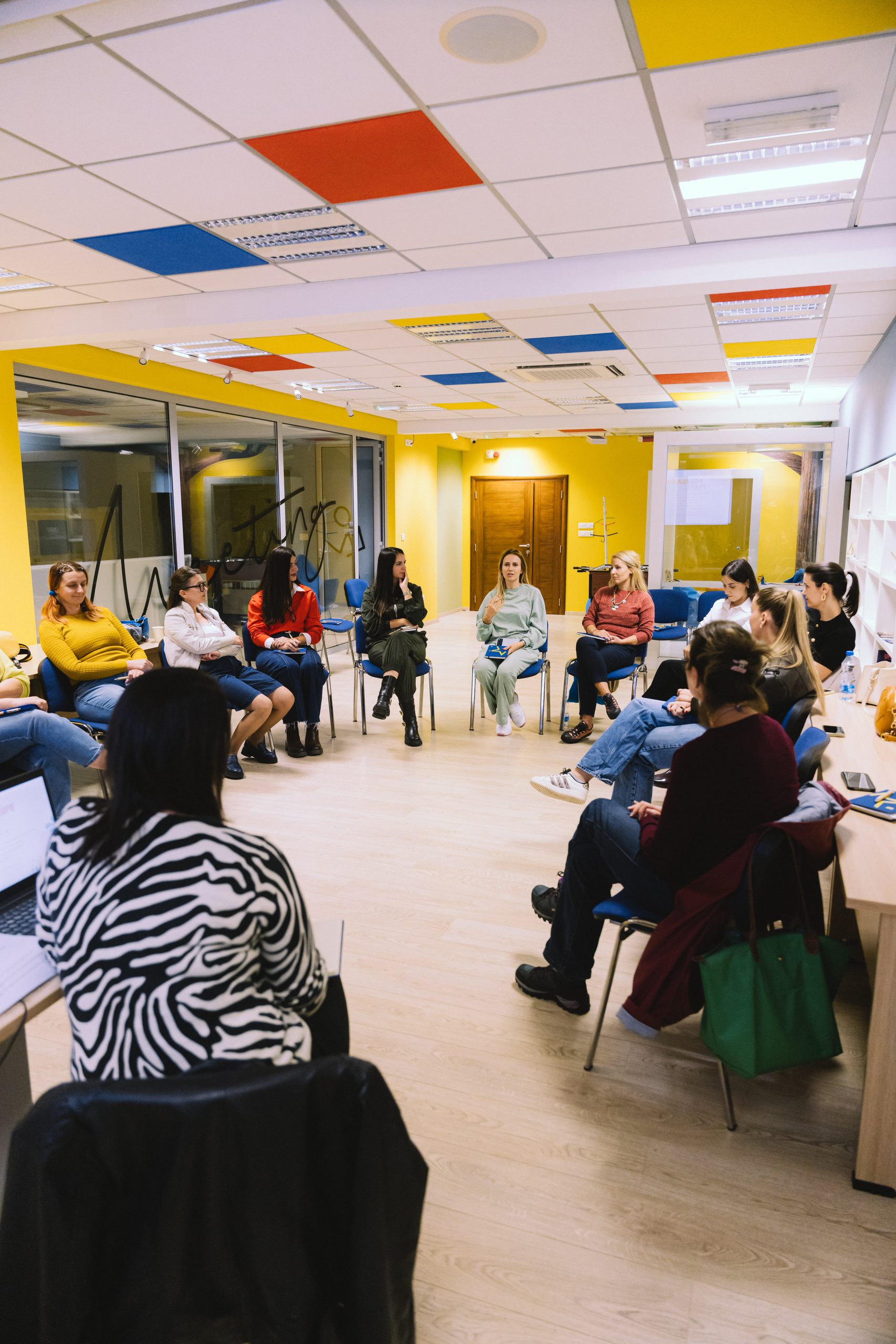

“If, after these workshops, someone starts making that little bit of space to pause and choose a little more often, I think that is a very valuable outcome,” Žujović concluded.
The “What Drives Me?” series of ČEK workshops is organised by Europe House to mark World Mental Health Day, which is traditionally observed on 10 October.
Two more workshops are scheduled for October, taking place on 15 and 22 October at Europe House in Podgorica.