


The National Policy Framework for Alternative Fuels Infrastructure, currently under preparation, will help align Montenegro’s transport and energy systems with European standards and support more sustainable mobility, which will require cooperation among institutions, local authorities, the energy sector, and the market.
This was stated during the opening remarks at the workshop on the “National Policy Framework for Alternative Fuels Infrastructure”, organised by the Ministry of Transport and the Ministry of Energy and Mining as part of the process of developing Montenegro’s first National Policy Framework for Alternative Fuels Infrastructure, within a project financed by the European Union.
Kai Nagel, Programme Manager at the Delegation of the European Union to Montenegro, said that the draft National Policy Framework for Alternative Fuels Infrastructure represents an important opportunity for Montenegro to improve its transport and energy systems in line with European standards.
Nagel also referred to the National Energy and Climate Plan, adopted in December 2025, which identified the electrification of transport as one of its priorities and, among other things, set a target of 35,000 electric vehicles by 2030.
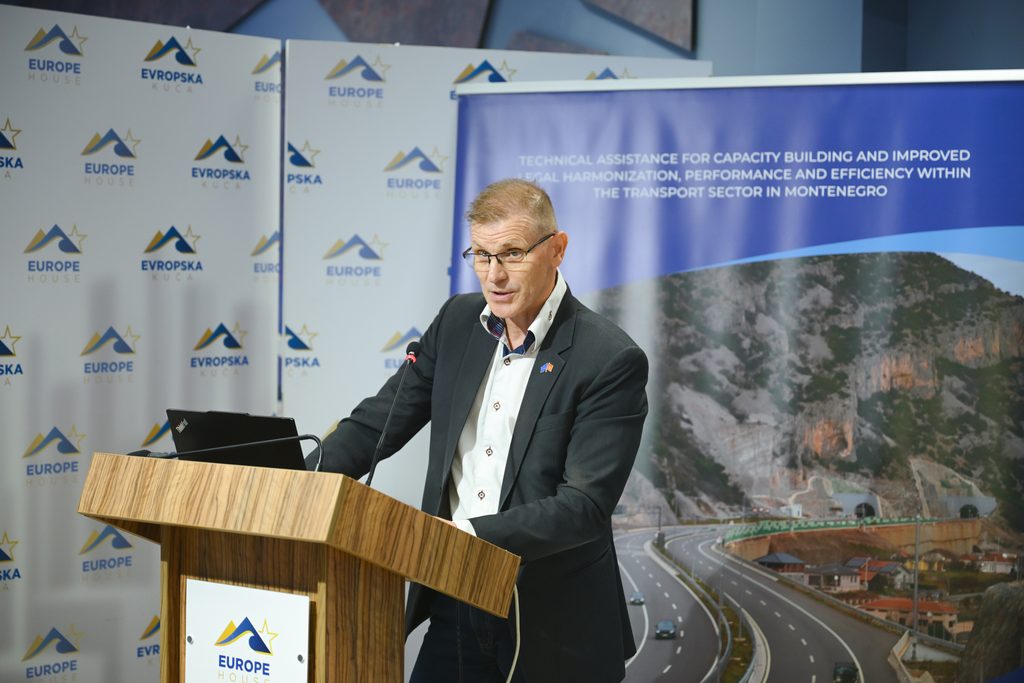
Nagel noted that Montenegro is entering this area from a relatively low starting point, with currently limited public infrastructure for electric vehicle charging.
“There is no dedicated charging network for heavy-duty vehicles, no hydrogen refuelling infrastructure, and no significant infrastructure for supplying ships with electricity from shore or stationary aircraft with electricity,” Nagel said.
Božidar Savović, State Secretary at the Ministry of Transport, said that the event represents an important step towards aligning Montenegro’s transport system with European energy transition objectives.

“Our goal is clear: to integrate the national transport network with European corridors, adopt high standards and significantly reduce greenhouse gas emissions,” Savović said.
Matija Medojević, State Secretary at the Ministry of Energy and Mining, said that the development of alternative fuels infrastructure demonstrates how closely interconnected the energy and transport sectors have become.
He recalled that, through the 2020 Sofia Declaration, Montenegro confirmed its commitment to implementing the Green Agenda for the Western Balkans and moving closer to European objectives on climate neutrality, energy and transport.
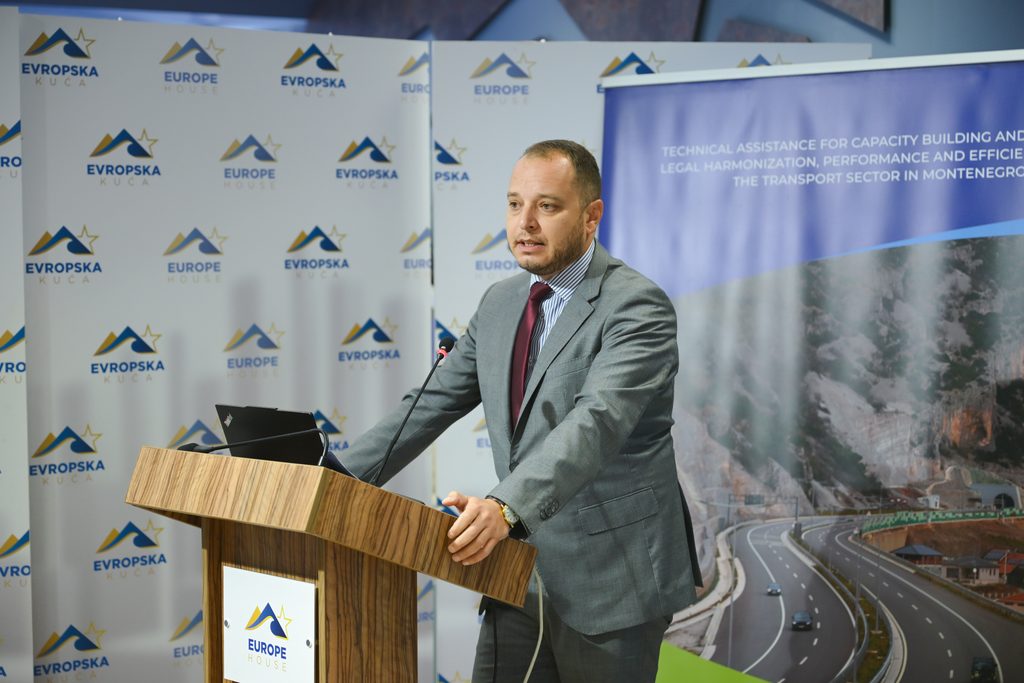
“Today, however, it is no longer enough to speak only of commitments. They must be translated into concrete policies, infrastructure and investments,” Medojević said.
During the presentation “Montenegro’s Transition to Alternative Fuels Infrastructure”, EU expert in strategic transport and urban development planning and author of the study, Mette Hoé, said that the development of alternative fuels infrastructure in Montenegro could not be the responsibility of the transport and energy sectors alone, but required cooperation among institutions, local authorities, the energy sector and the market.
Speaking about the current situation in Montenegro, Hoé said that some infrastructure was already in place, but that development was still at a very early stage in some areas.
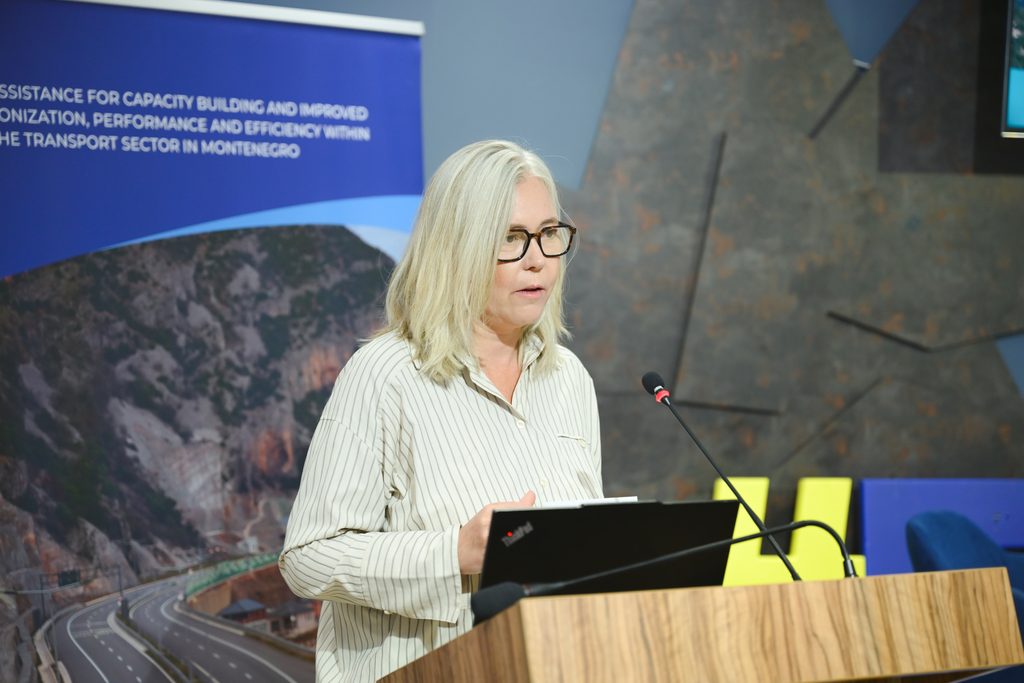
“There is some infrastructure, but when you look at the bigger picture, it seems that you are only just getting started when it comes to charging infrastructure for heavy-duty vehicles. There is still no hydrogen infrastructure or shore-side electricity supply in ports,” Hoé said, adding that there was reason for optimism.
The workshop was held as part of the project “Technical Assistance for Strengthening Capacities and Improving Compliance, Performance and Efficiency in the Transport Sector in Montenegro”, financed by the European Union.
The project is implemented by a consortium led by DAI Global Belgium, in partnership with GIZ and ENOVA.