


An Interview with Zenepa Lika
From pylons, balustrades and ornaments to the Ulcinj Salina; from Germany to Montenegro. Zenepa Lika is a woman who has exchanged architectural creations for activism and the struggle to preserve the nature’s creations. Lika is an architect, an environmental activist, and the Executive Director of the Dr Martin Schneider Jacoby Association.
After studying architecture at Bergische Universität Wuppertal and working for several years in Cologne, Zenepa decided to return to her beloved Ulcinj and devote herself to activism and work for the common good.
Zenepa did not wait for the perfect moment, which, in her view, does not exist. She held firm convictions and bravely took the first step.
However, after the first step comes the journey, and that journey towards activism, Lika says, is not easy. It is filled with institutional and political obstacles that often bring a sense of isolation and frequent attempts by others to diminish the importance of what we are fighting for.
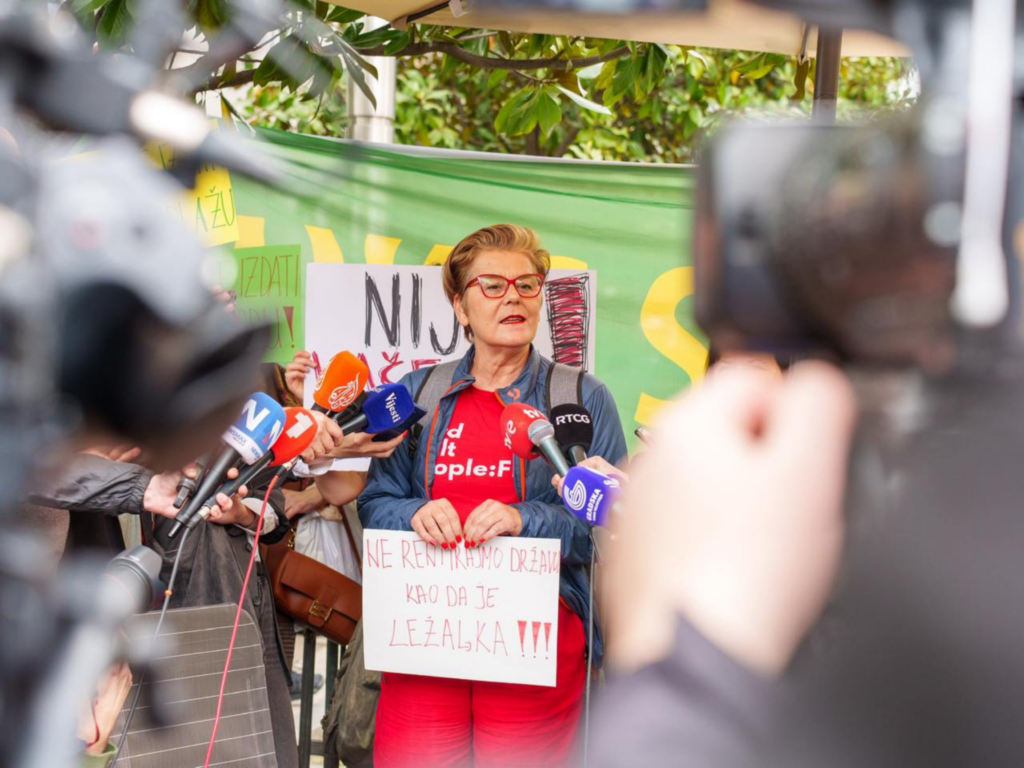
“It is particularly challenging when support within the family is lacking just because you are a WOMAN. When you do not have the support of those closest to you, you are fighting on two fronts, and that requires additional energy and strength. That is why it is important for your immediate circle to stand by your side. Fortunately, I have that support,” Lika emphasises.
The pressures faced by women in environmental movements are often subtle — expressed through the undermining authority, exclusion from decision-making, or belittlement — but they can also be open and direct.
As Lika points out, the patriarchal mindset remains strong and deeply rooted in Montenegro. Even when a woman attains a high position, her authority is more frequently questioned, and her mistakes are less readily forgiven.
Nevertheless, despite everything, women bring immense strength to environmental movements, Lika says: empathy, perseverance, the ability to unite communities, a long-term vision, as well as subject-matter expertise and objectivity in approaching problems. These qualities are not weaknesses, but advantages and the foundation of serious and sustainable change.
“In Montenegro, WOMEN from the NGO sector are among the strongest, most persistent and most active. That is our strength — one they can neither ignore nor silence,” Lika stresses.
Her message to women who wish to become involved in the fight for the environment is that activism does not have to begin with a large protest; it can begin with a conversation.
“Change begins when we decide not to remain silent or quiet, even if our community is accustomed to silence.”