


Information is power. But what happens when we are no longer certain that information is true? With the emergence of artificial intelligence, the boundary between the real and the generated has become thinner than ever before.
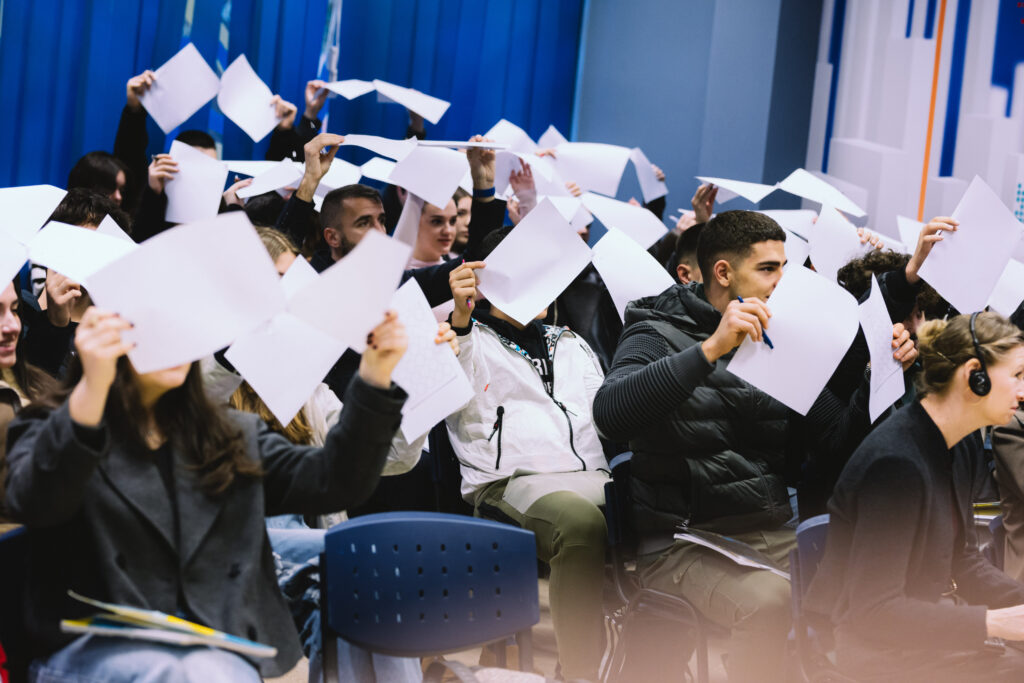
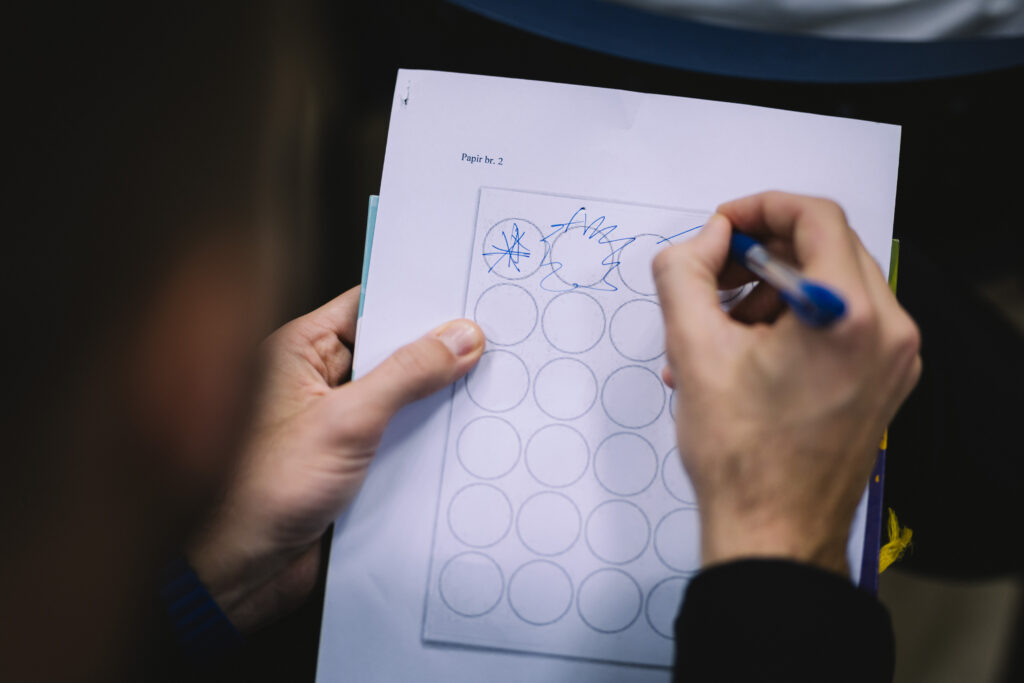
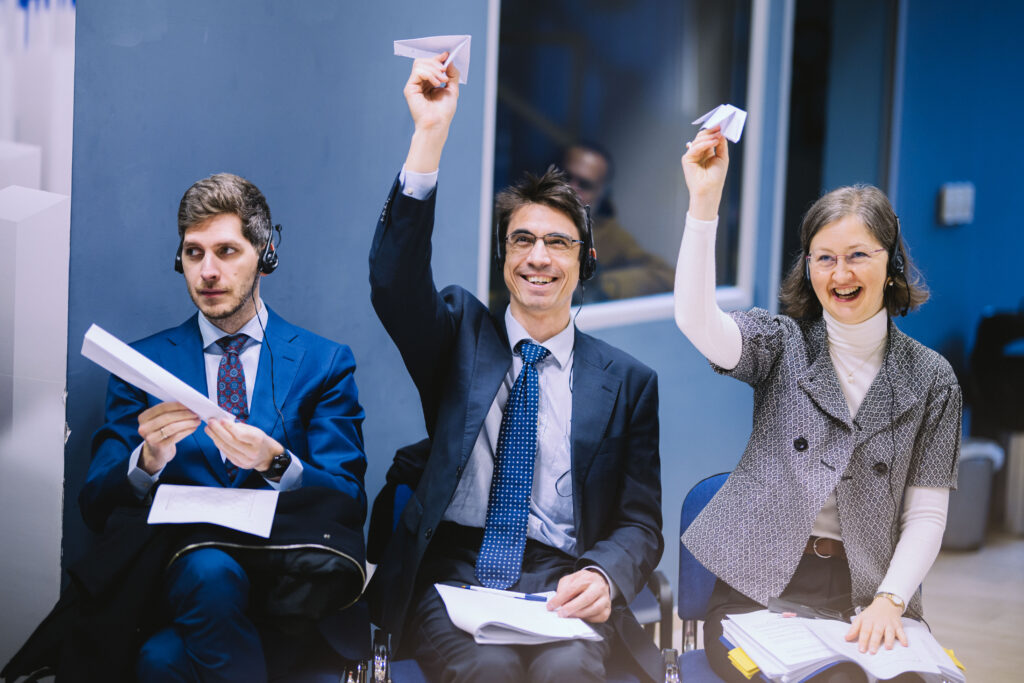
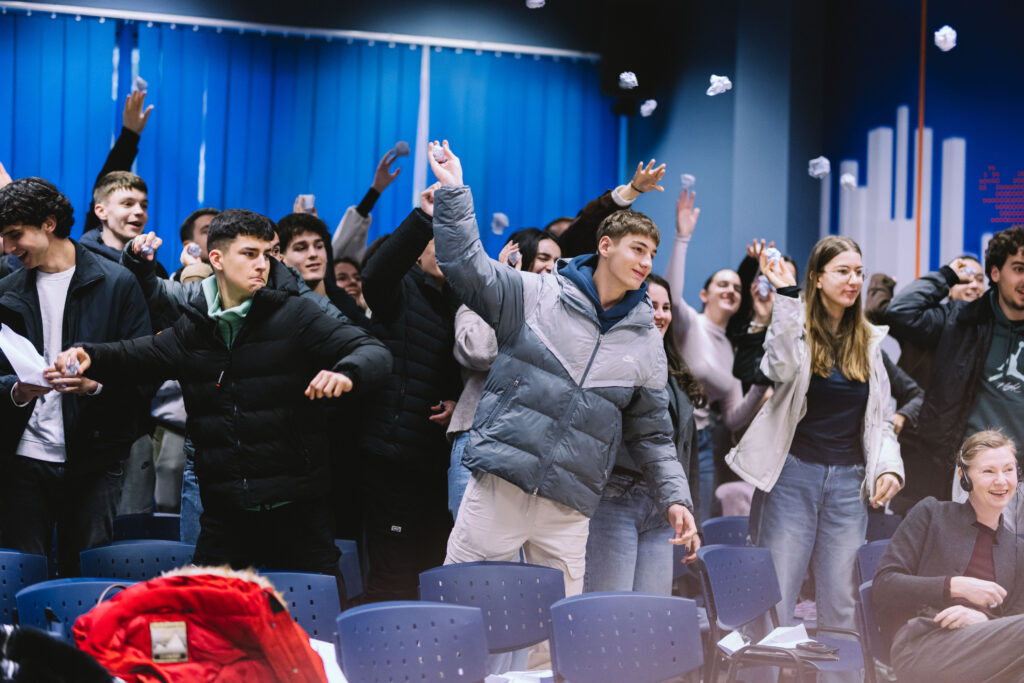
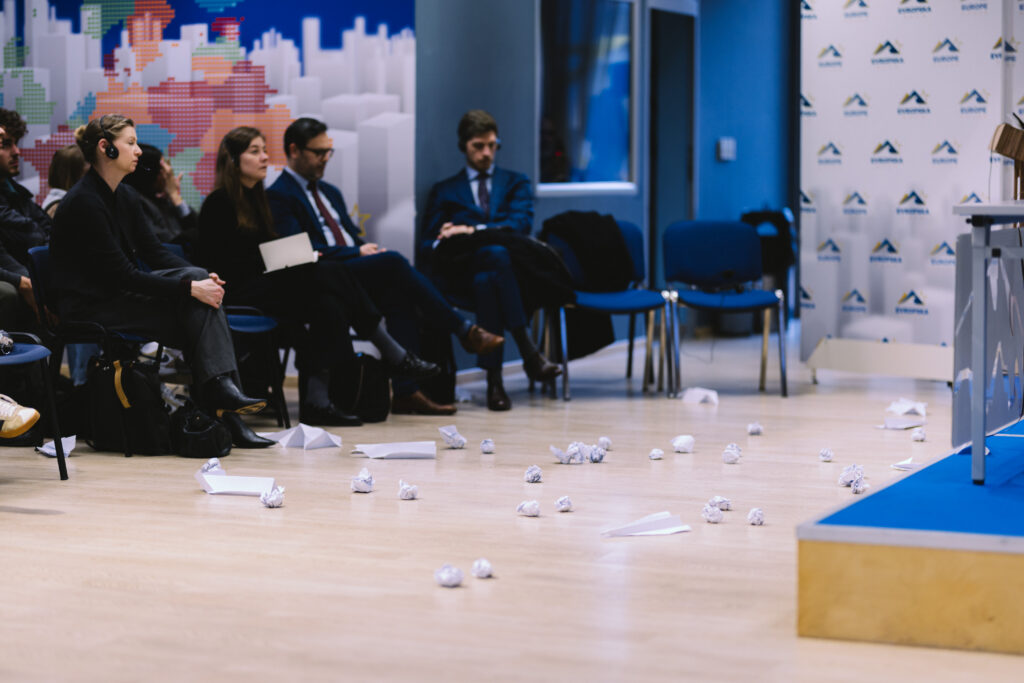
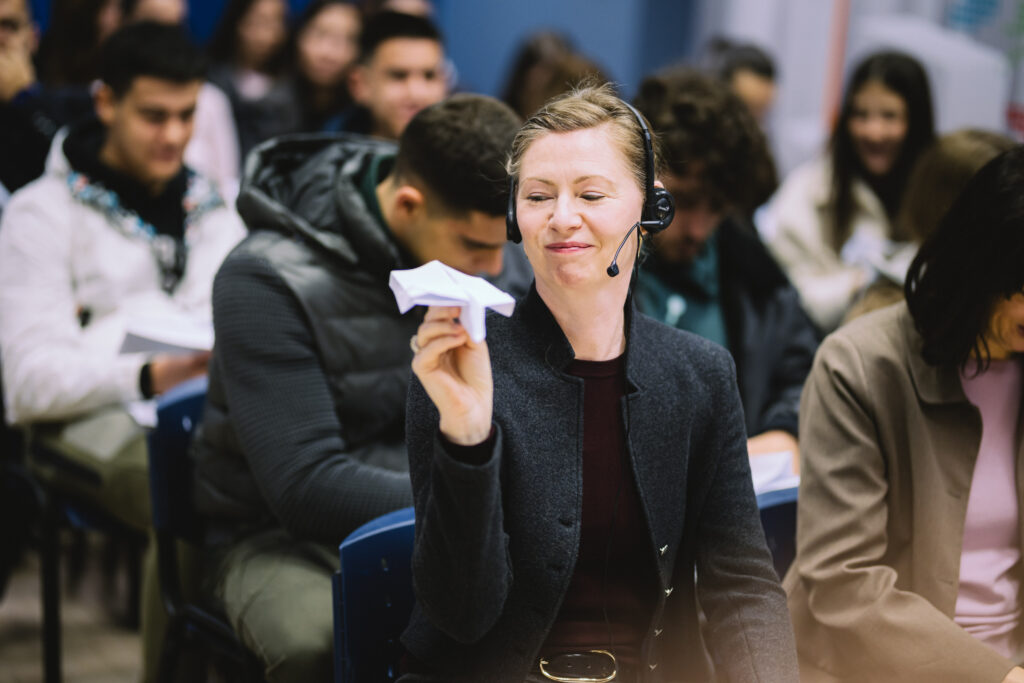
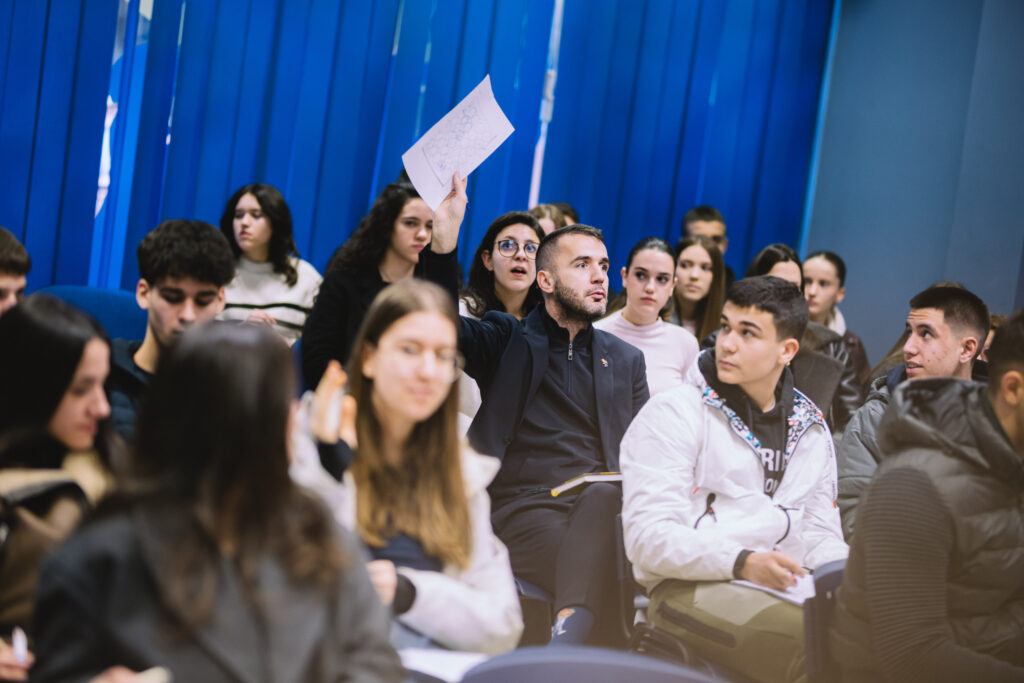
During a lecture on media literacy and elections at Europe House, we did not merely listen to theory. We made paper aeroplanes, drew pictures, and tried to think outside the box. We heard a heavy metal version of “Banović Strahinja” and watched AI-generated films that appeared entirely convincing. The aim was to awaken our critical thinking. If AI can create a song, a voice, or a face that sounds and looks authentic, how can we be sure what is genuine?
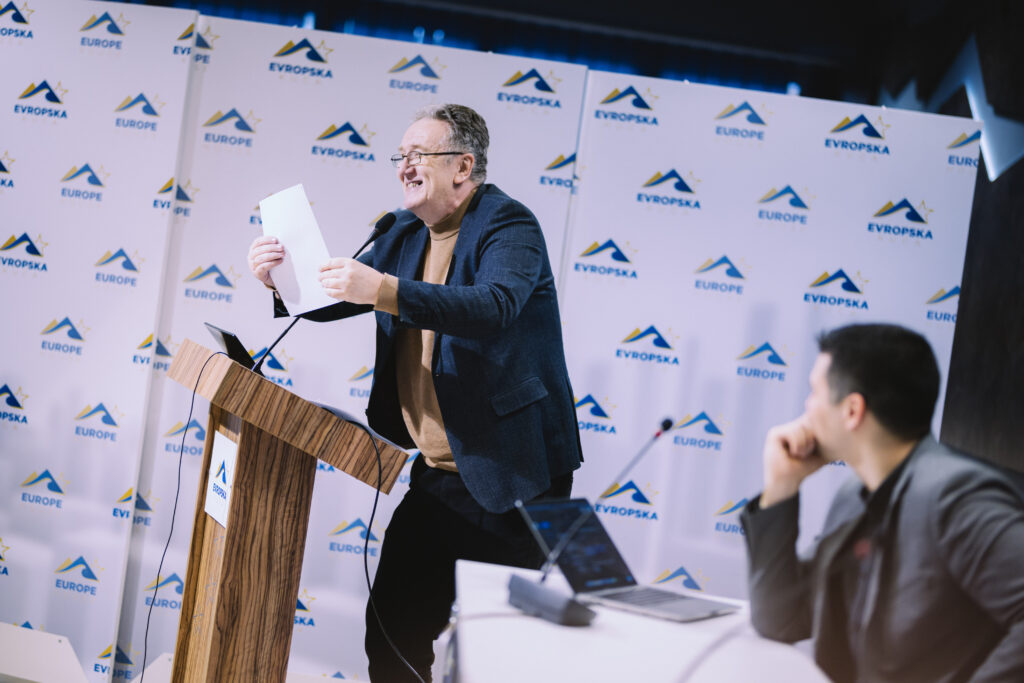
“We can no longer trust our own eyes,” said Professor Nenad Vujadinović.
The problem lies not only in the technology itself, but in the way we use it. Today, attention is the most valuable currency. Social media platforms and applications are designed to keep us attached to our devices for as long as possible. The more time we spend on our phones, the more data we leave behind. And that data enables precise profiling.
Algorithms do not show us the world as it truly is, but a version of the world which will keep us engaged on these platforms for the longest. If we frequently click on political content, we will receive even more of it. If we react to fear or anger, we will be fed further content that amplifies those emotions. This is how information bubbles are formed, in which we see only one version of reality.
It becomes particularly dangerous when such mechanisms are used in election campaigns. In the United States, as early as the 2016 elections, campaigns involving microtargeting of voters were uncovered, in which different groups of people received political messages tailored to their fears, interests, and vulnerabilities. Today, with AI, such messages can be even more precise and persuasive.
During the 2024 elections in the United States, the first recorded cases of large-scale use of AI-generated audio messages emerged, imitating the voices of politicians. In some states, voters received calls containing false messages intended to discourage them from voting. This demonstrates how swiftly technology can shift from entertainment to a political weapon.
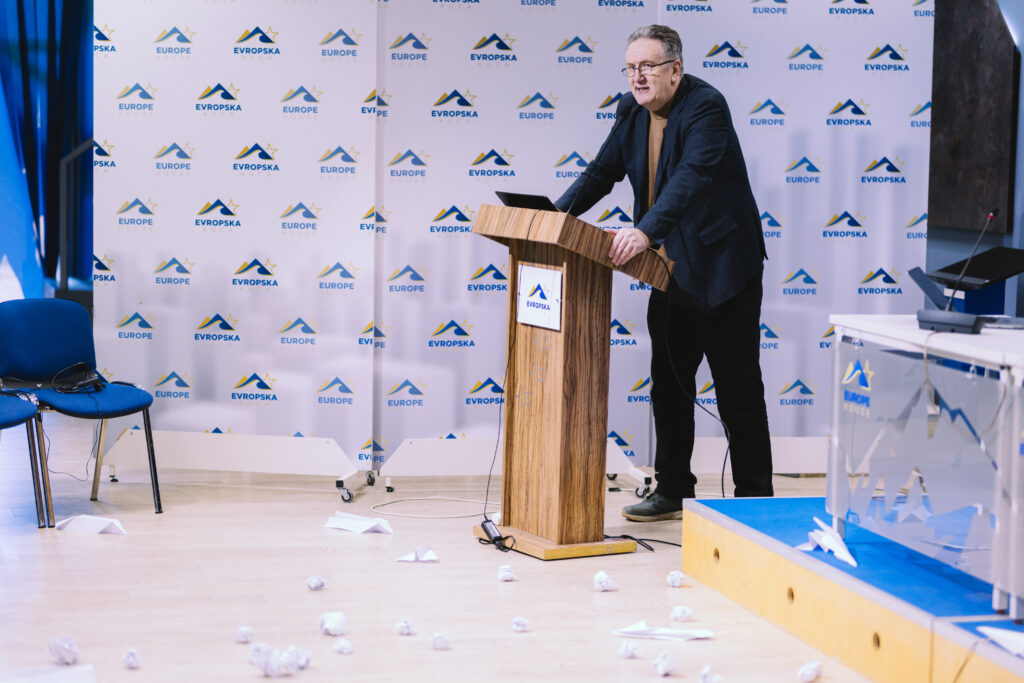
Professor Vujadinović also reminded us that major technology companies possess the capacity to send hyper-personalised messages, based on detailed knowledge of our behaviour. This means that two people can follow the same campaign yet see entirely different messages.
“What can we do? First, we must turn to one another and reconnect physically. The moment a device becomes the intermediary in our communication, we are done,” Vujadinović stated.
Perhaps we cannot halt the development of artificial intelligence. But we can slow down and verify the source. We can ask who stands behind a piece of information. We can speak face-to-face, without screens between us. At a time when both voice and image can be falsified, critical thinking becomes more important than any application.
That is why media literacy today is not a luxury, but a fundamental civic skill. If we want fair elections and a responsible society, we must learn not to click immediately, not to share immediately, and not to believe everything that appears convincing. In a world where everything seems possible, the only true protection we have is the ability to think for ourselves.